
Appliance & Refrigerator Removal Cost in Seattle, WA
Most people pay $90–$180. Updated for 2026.
Local view of our Appliance & Refrigerator Removal cost guide — national ranges, what moves them, and every city we cover.
Replacing a fridge, washer or range in Seattle, WA usually leaves you with a second problem: the old one is still standing in the kitchen, and it is too heavy to move alone.
Anything with a cooling circuit — refrigerators, freezers, air conditioners, dehumidifiers — is regulated separately, because the refrigerant has to be recovered by a certified technician before the shell can be scrapped.
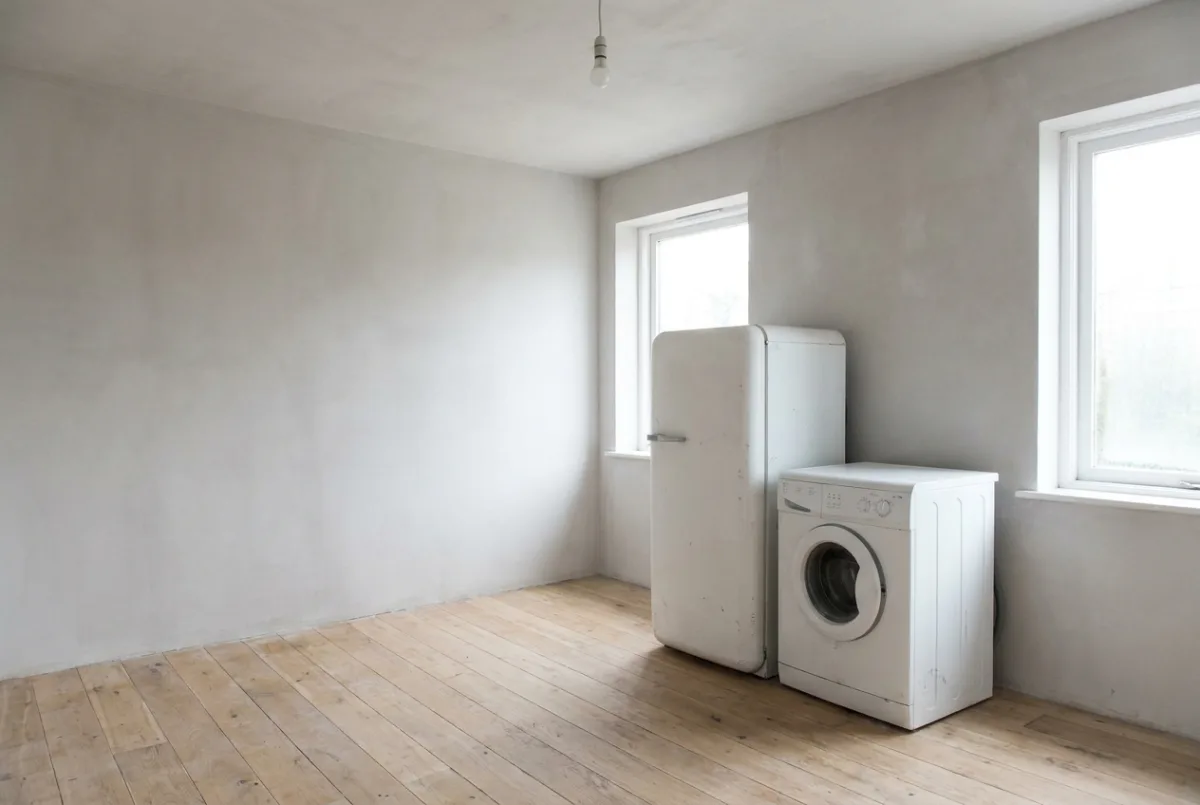
Appliance & Refrigerator Removal in Seattle: what actually moves the price
With 38% of homes detached and 51% in buildings of five or more, Seattle sits right on the line where appliance removal stops being a driveway job and starts being a carry. A photo settles which one yours is.
At roughly 9,298 residents per square mile, Seattle keeps trucks busy on short routes. That density is why appliance removal quotes here tend to cluster: pros are competing on the same streets on the same day.
56% of occupied homes in Seattle are rented, and month-end is when that shows: appliance removal bookings cluster around move-out weekends, so a midweek slot is usually the cheaper one.
Residents (2024)
Square miles of land
People per square mile
Local figures: U.S. Census Bureau — Seattle city. Checked 2026-08-21.
Appliance & Refrigerator Removal in Seattle: where the city stops and a hauler starts
The free route in Seattle has hard edges, and they are the reason people end up paying: The large-item category covers anything bigger than 2 ft by 2 ft by 2 ft, and nothing may exceed 300 pounds, eight feet in height or four feet in diameter. $31 per large item — furniture, appliances and TVs bigger than 2 ft by 2 ft by 2 ft — with older refrigerators and freezers priced separately. One battery pickup a year is free; further ones carry a small charge.
Past those limits the city is not an option at all — not slower, not pricier, simply unavailable. That is the line a hauler exists for, and it is worth knowing exactly where it sits before you start carrying anything.
Collection in Seattle is run by Seattle Public Utilities. Below is what they will take, straight from their own rules — and where each route runs out.
Booked bulky pickup
Anything that does not belong in the garbage or the home recycling — the city calls it Special Item Pickup and collects it on demand. The large-item category covers anything bigger than 2 ft by 2 ft by 2 ft, and nothing may exceed 300 pounds, eight feet in height or four feet in diameter. $31 per large item — furniture, appliances and TVs bigger than 2 ft by 2 ft by 2 ft — with older refrigerators and freezers priced separately. One battery pickup a year is free; further ones carry a small charge. Schedule online or call Seattle Public Utilities on (206) 684-3000. The pickup happens on your next regular garbage day after it is booked, so nothing goes outside before you have the confirmation. Items stand on a flat, level surface with no stairs, easy to reach from the street, and out by 7 a.m. on the collection day — covered if it is raining. Refrigerator and freezer doors with latches have to come off or be tied shut. The large-item list runs to appliances, refrigerators, freezers, stoves, dishwashers, dryers, washing machines, air conditioners, trash compactors, TVs, monitors, computers, furniture, dressers, cabinets, tables, chairs, sofas, and mattresses and box springs. Smaller awkward things — household batteries, lightbulbs, styrofoam blocks, empty camping propane canisters, small electronics — go in their own capped categories, and used cooking or motor oil needs no appointment at all: sealed jugs with your address on them go out on the regular collection day.
Checked against the operator’s own page on 2026-09-19. Source
Refrigerants are why fridges cost more
Federal rules require refrigerant to be recovered rather than vented, and that is a certified job with its own paperwork. A washing machine is just steel and a motor; a fridge is steel, a motor and a regulated gas. That single difference is most of the price gap between them.
What changes the price
Weight and access, mostly. A top-loader in the garage is straightforward; a built-in double-door fridge that has to come out of a galley kitchen, down a hallway and through a storm door takes two people and real time. Scrap value works in your favour — steel-heavy appliances often sit at the lower end because the metal is worth something.
Typical appliance removal cost
$90 – $180
A national range, not a quote. Your actual prices come from local pros bidding on your job.
How JunkerClub works in Seattle
Post your job
Describe what needs to go and add a photo. It takes a minute and costs nothing.
Compare quotes
Local pros in Seattle bid on your job from your photos — no site visit.
Pay your pro directly
Pick the offer you like. You pay your pro directly when the job is done — cash or card, no platform markup.
Appliance & Refrigerator Removal pricing breakdown
| Service | Typical market price | JunkerClub estimate |
|---|---|---|
| Washer, dryer or dishwasher | $110 – $170 | $90 – $140 |
| Refrigerator or freezer | $140 – $230 | $115 – $190 |
| Full kitchen set (3+ appliances) | $320 – $500 | $260 – $410 |
Estimates only. The final price depends on how much there is, how easy it is to reach, and what the pro quotes.
How we build these ranges — and why a real quote can land outside them →
Appliance & Refrigerator Removal in Seattle — common questions
How much does appliance removal cost in Seattle?
Most people pay $90–$180. That is a national range for appliance removal, not a quote — your real price comes from local pros bidding on your photos, and it moves with volume, stairs and how far the item has to travel to the truck.
Will the pros disconnect the appliance for me?
Most will unhook a plug and a standard water line, but gas connections are a different matter — that is licensed work and a responsible crew will not touch it. Have gas appliances disconnected before the pickup, and say so when you post the job.
Why does a refrigerator cost more than a washing machine?
Because of the refrigerant. It has to be recovered by a certified technician before the unit can be scrapped, and that step carries a fee no washing machine incurs. Weight and door-clearance problems add the rest.
Is my old appliance worth anything?
The steel has scrap value, which is already reflected in the quotes you get — appliance removal is often cheaper per item than furniture for exactly this reason. A unit that still runs may be worth more sold or donated than scrapped.
How quickly can it be picked up?
It depends on how many pros cover your area. On our first jobs the first quote arrived within one to three days, and we email you the moment one comes in. Once you pick a pro you choose the date and time window; same-day or next-day pickup is possible when a crew has room on the truck.
What does JunkerClub charge me?
Nothing. Posting a job and collecting quotes is free, and you pay your pro directly when the work is done. The pro pays the platform a small fee only when they win the job — it never gets added to your price.
Do I have to carry it outside myself in Seattle?
No — the crew does the lifting and loading, and that labour is most of what you are paying for. In Seattle the stock is split — 38% of homes are detached and the rest are attached or in larger buildings — so two addresses on the same street can carry very differently. The median home here was built around 1974; single-width staircases are common in that stock and lifts are rare. Say which floor it is on and whether there is a lift when you post the job; that is the part that moves the quote. Housing figures are from the U.S. Census Bureau.
What makes a junk removal quote in Seattle different from the national average?
Access and housing type, mostly. In Seattle, 38% of homes are detached and the city runs at about 9,298 residents per square mile — the housing stock is split between houses and larger buildings, so two addresses on the same street can price very differently. Renters occupy 56% of occupied homes here, which also shapes when the work happens. The prices on this site are national ranges; the number you actually pay comes from local pros bidding on your photos. Housing figures are from the U.S. Census Bureau.
Keep reading
- Junk removal in Seattle, WA
- Couch & Sofa Removal cost in Seattle
- Mattress Disposal cost in Seattle
- TV & Electronics Disposal cost in Seattle
- Garage Cleanout cost in Seattle
- Apartment & Tenant Cleanout cost in Seattle
- Construction Debris Removal cost in Seattle
- Hot Tub Removal cost in Seattle
- Furniture Removal cost in Seattle
- Refrigerator Disposal cost in Seattle
- Estate Cleanout cost in Seattle
- Hoarding Cleanout cost in Seattle
- Yard Waste Removal cost in Seattle
- Shed Removal & Demolition cost in Seattle
- Piano Removal cost in Seattle
- Exercise Equipment Removal cost in Seattle
- Office Furniture Removal cost in Seattle
- Carpet Removal cost in Seattle
- Water Heater Removal cost in Seattle
- Trash & Junk Hauling cost in Seattle
- Basement Cleanout cost in Seattle
- Storage Unit Cleanout cost in Seattle
- Foreclosure & Eviction Cleanout cost in Seattle
- Scrap Metal Removal cost in Seattle
- Tire Disposal cost in Seattle
- Above-Ground Pool Removal cost in Seattle
- Swing Set & Playground Removal cost in Seattle
- Fence Removal cost in Seattle
- Deck Removal cost in Seattle
- Bulk Trash Pickup cost in Seattle
Appliance & Refrigerator Removal prices nearby:
Where the city stops in Seattle:
Your junk's last stop.
Free quotes from local pros — no site visit.
Post your job in 2 minutes →Spotted something wrong or out of date on this page? Tell us — we check and fix it.