
Apartment & Tenant Cleanout Cost in Fort Worth, TX
Most people pay $300–$700. Updated for 2026.
Local view of our Apartment & Tenant Cleanout cost guide — national ranges, what moves them, and every city we cover.
When a tenant leaves a unit in Fort Worth, TX behind full of furniture, the clock starts immediately: every day the place sits uncleared is a day it cannot be shown or relet.
Landlords, property managers and families handling an estate all face the same job — a whole home emptied at once, usually to a deadline, often up stairs and through a shared corridor.
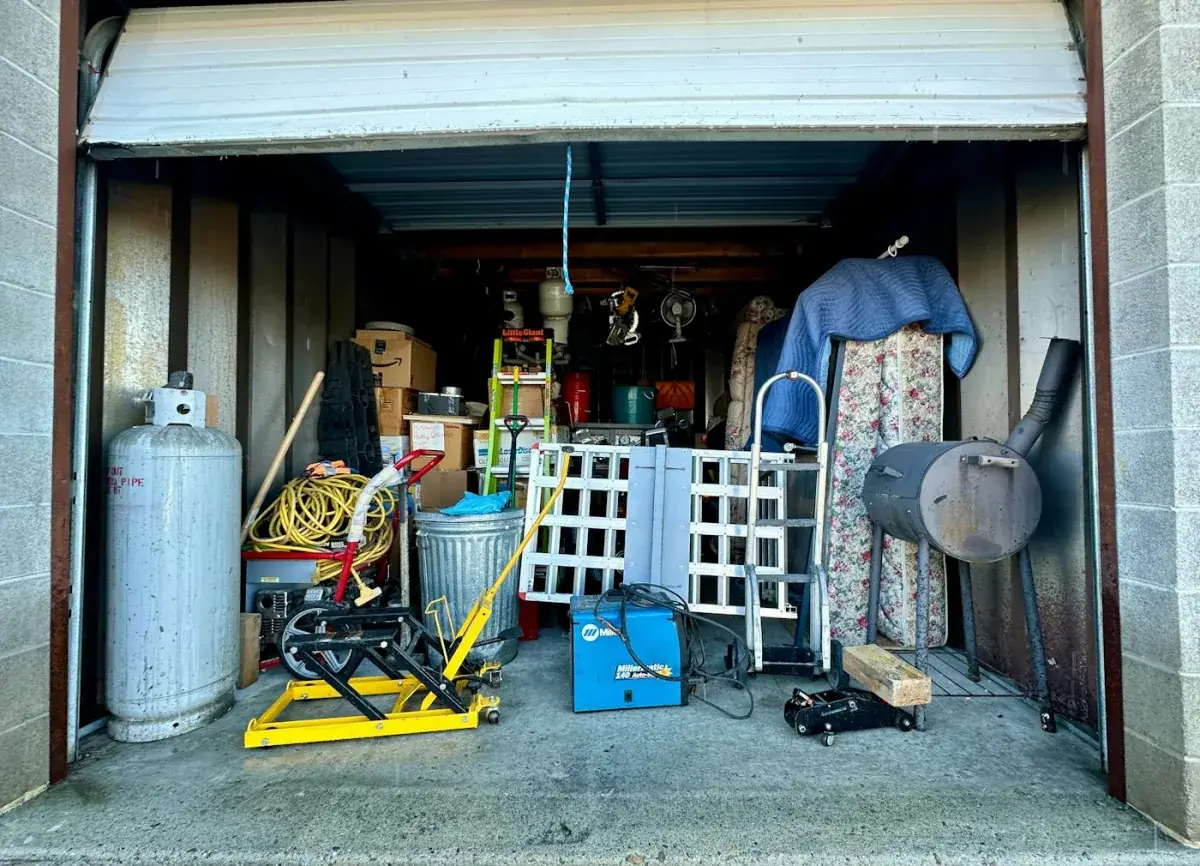
Apartment & Tenant Cleanout in Fort Worth: what actually moves the price
65% of homes in Fort Worth are detached, which takes stairs and lifts out of the apartment cleanout conversation almost entirely. The question left is how much there is.
Drive time is a real line in a Fort Worth quote — the city covers 350 square miles — so the truck that is already working near you can come in under one crossing the whole area. Collecting a few bids is how you find out which is which.
Most homes in Fort Worth were built around 1992, and the layout of that era decides more about a apartment cleanout job than the price list does.
Residents (2024)
Square miles of land
People per square mile
Local figures: U.S. Census Bureau — Fort Worth city. Checked 2026-08-21.
Apartment & Tenant Cleanout in Fort Worth: where the city stops and a hauler starts
The free route in Fort Worth has hard edges, and they are the reason people end up paying: One pile a month of up to ten cubic yards — about eight feet long, six wide and six tall — at no extra charge, and only one pile per household.
Past those limits the city is not an option at all — not slower, not pricier, simply unavailable. That is the line a hauler exists for, and it is worth knowing exactly where it sits before you start carrying anything.
Collection in Fort Worth is run by City of Fort Worth Environmental Services, Solid Waste. Below is what they will take, straight from their own rules — and where each route runs out.
Taking it yourself
The public drop-off is the city's four Drop-Off Stations. Free: bulk waste, trash, recyclables, yard waste and household chemicals are all accepted. Open to Fort Worth homeowners and some renters.
Checked against the operator’s own page on 2026-09-15. Source
What the regular cart will not take
Each address has an assigned bulk week once a month. The pile goes out by 7 a.m. on that Monday and no earlier than 6 p.m. the Friday before; crews have until the following Saturday at 5 p.m. to reach it, and once they have passed your street nothing more goes out until next month. Keep the pile at least two feet clear of trees, mailboxes, water meters and fences or it is left. Not taken: yard trimmings in plastic bags (they go in paper yard bags with the weekly brush collection), auto parts, batteries and tires, contractor remodelling and demolition debris such as shingles, wallboard and lumber, electronics, any appliance holding coolant, gasoline or chemicals — air conditioners, refrigerators, lawnmowers — dirt, rocks, concrete and ceramic tile, root balls or stumps over eighteen inches with soil, liquids, poisons, explosives and glass. Most of those are taken free at the city Drop-Off Stations instead, and residents may leave four tires there every six months.
Checked against the operator’s own page on 2026-09-15. Source
Why turnaround matters more than price
For a rental, the real cost is vacancy. A unit cleared on Tuesday can be photographed on Wednesday; one waiting a fortnight for a skip permit is a month of lost rent. This is why most managers care less about the cheapest quote than about who can be there first — and why it is worth saying your deadline out loud when you post the job.
What drives the quote
Volume first, access second. A studio is a half load; a three-bedroom is often two full loads. Then the building: a third-floor walk-up costs more than a ground-floor unit with a loading bay, and buildings that only allow moves during certain hours narrow the crew’s day. Mention floor, elevator and any building rules up front.
Typical apartment cleanout cost
$300 – $700
A national range, not a quote. Your actual prices come from local pros bidding on your job.
How JunkerClub works in Fort Worth
Post your job
Describe what needs to go and add a photo. It takes a minute and costs nothing.
Compare quotes
Local pros in Fort Worth bid on your job from your photos — no site visit.
Pay your pro directly
Pick the offer you like. You pay your pro directly when the job is done — cash or card, no platform markup.
Apartment & Tenant Cleanout pricing breakdown
| Service | Typical market price | JunkerClub estimate |
|---|---|---|
| Studio or one bedroom | $350 – $550 | $280 – $450 |
| Two bedroom | $550 – $850 | $440 – $700 |
| Three bedroom or larger | $800 – $1,400 | $650 – $1,150 |
Estimates only. The final price depends on how much there is, how easy it is to reach, and what the pro quotes.
How we build these ranges — and why a real quote can land outside them →
Apartment & Tenant Cleanout in Fort Worth — common questions
How much does apartment cleanout cost in Fort Worth?
Most people pay $300–$700. That is a national range for apartment cleanout, not a quote — your real price comes from local pros bidding on your photos, and it moves with volume, stairs and how far the item has to travel to the truck.
How fast can a unit be cleared in Fort Worth?
Same-week is normal and next-day is often possible, because this is scheduled work rather than an emergency call-out. Put your deadline in the job description — pros who cannot meet it will not bid, which saves everyone the back-and-forth.
Can you work around a building’s move-out hours?
Yes, and it is worth flagging early. Many buildings restrict moves to weekday business hours or require the service elevator to be booked. A crew that knows this in advance plans around it; one that turns up outside the window loses the slot and you lose the day.
What happens to belongings left behind by a tenant?
That is a legal question before it is a hauling one — most states set a notice period and a storage duty before abandoned property can be disposed of. Confirm you have cleared that step; the crew handles the removal, not the notice.
How quickly can it be picked up?
It depends on how many pros cover your area. On our first jobs the first quote arrived within one to three days, and we email you the moment one comes in. Once you pick a pro you choose the date and time window; same-day or next-day pickup is possible when a crew has room on the truck.
What does JunkerClub charge me?
Nothing. Posting a job and collecting quotes is free, and you pay your pro directly when the work is done. The pro pays the platform a small fee only when they win the job — it never gets added to your price.
Do I have to carry it outside myself in Fort Worth?
No — the crew does the lifting and loading, and that labour is most of what you are paying for. In Fort Worth 65% of homes are detached, so most jobs are a driveway carry and the truck can usually get close to the door. The median home here was built around 1992, so doorways and stairs are usually the wider post-war sizes. Say which floor it is on and whether there is a lift when you post the job; that is the part that moves the quote. Housing figures are from the U.S. Census Bureau.
What makes a junk removal quote in Fort Worth different from the national average?
Access and housing type, mostly. In Fort Worth, 65% of homes are detached and the city runs at about 2,878 residents per square mile — nearly every address has its own driveway and garage, so volume matters far more than access. Renters occupy 43% of occupied homes here, which also shapes when the work happens. The prices on this site are national ranges; the number you actually pay comes from local pros bidding on your photos. Housing figures are from the U.S. Census Bureau.
Keep reading
- Junk removal in Fort Worth, TX
- Couch & Sofa Removal cost in Fort Worth
- Mattress Disposal cost in Fort Worth
- TV & Electronics Disposal cost in Fort Worth
- Appliance & Refrigerator Removal cost in Fort Worth
- Garage Cleanout cost in Fort Worth
- Construction Debris Removal cost in Fort Worth
- Hot Tub Removal cost in Fort Worth
- Furniture Removal cost in Fort Worth
- Refrigerator Disposal cost in Fort Worth
- Estate Cleanout cost in Fort Worth
- Hoarding Cleanout cost in Fort Worth
- Yard Waste Removal cost in Fort Worth
- Shed Removal & Demolition cost in Fort Worth
- Piano Removal cost in Fort Worth
- Exercise Equipment Removal cost in Fort Worth
- Office Furniture Removal cost in Fort Worth
- Carpet Removal cost in Fort Worth
- Water Heater Removal cost in Fort Worth
- Trash & Junk Hauling cost in Fort Worth
- Basement Cleanout cost in Fort Worth
- Storage Unit Cleanout cost in Fort Worth
- Foreclosure & Eviction Cleanout cost in Fort Worth
- Scrap Metal Removal cost in Fort Worth
- Tire Disposal cost in Fort Worth
- Above-Ground Pool Removal cost in Fort Worth
- Swing Set & Playground Removal cost in Fort Worth
- Fence Removal cost in Fort Worth
- Deck Removal cost in Fort Worth
- Bulk Trash Pickup cost in Fort Worth
Apartment & Tenant Cleanout prices nearby:
Where the city stops in Fort Worth:
Your junk's last stop.
Free quotes from local pros — no site visit.
Post your job in 2 minutes →Spotted something wrong or out of date on this page? Tell us — we check and fix it.