
Refrigerator Disposal Cost in New York, NY
Most people pay $115–$190. Updated for 2026.
Local view of our Refrigerator Disposal cost guide — national ranges, what moves them, and every city we cover.
A dead refrigerator in New York, NY is the appliance nobody can quietly get rid of. It will not fit in a car, the trash service will not take it, and leaving it at the curb is illegal in most places because of the refrigerant inside.
Federal rules require that refrigerant be recovered by a certified technician before the shell is scrapped — that single requirement is why a fridge costs more to remove than a washing machine of the same weight.
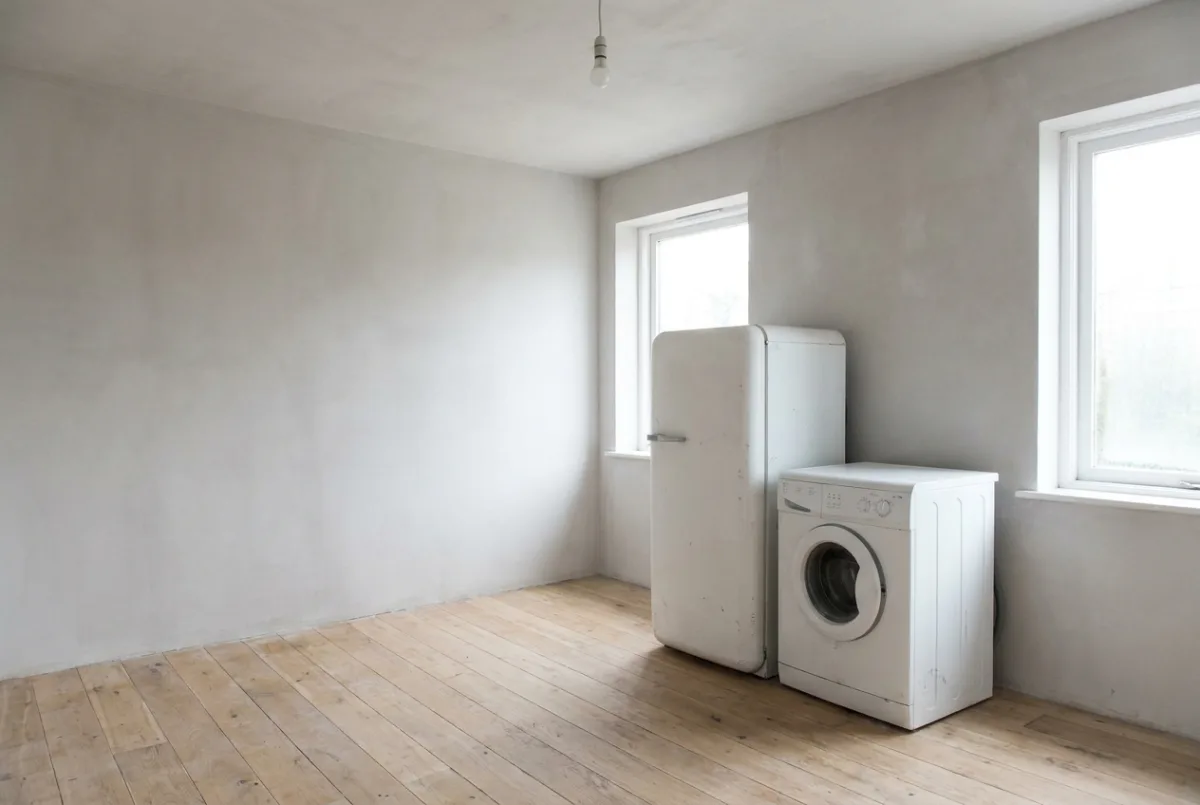
Refrigerator Disposal in New York: what actually moves the price
In New York, 62% of homes sit in buildings of five units or more. For refrigerator disposal that is the number that matters: what a crew is really pricing is the distance and the stairs between your door and the tailgate, not the item itself.
67% of occupied homes in New York are rented, and month-end is when that shows: refrigerator disposal bookings cluster around move-out weekends, so a midweek slot is usually the cheaper one.
At roughly 28,217 residents per square mile, New York keeps trucks busy on short routes. That density is why refrigerator disposal quotes here tend to cluster: pros are competing on the same streets on the same day.
Residents (2024)
Square miles of land
People per square mile
Local figures: U.S. Census Bureau — New York city. Checked 2026-08-21.
Refrigerator Disposal in New York: where the city stops and a hauler starts
The free route in New York has hard edges, and they are the reason people end up paying: Free, and residents only. A business that books one may be issued a Notice of Violation and has to hire a private carter instead. Up to six large items at the curb per collection day, collected free. Something counts as a large item if it is too big to fit inside a bin or bag.
Past those limits the city is not an option at all — not slower, not pricier, simply unavailable. That is the line a hauler exists for, and it is worth knowing exactly where it sits before you start carrying anything.
Collection in New York is run by New York City Department of Sanitation (DSNY). Below is what they will take, straight from their own rules — and where each route runs out.
Booked bulky pickup
Only refrigerators, freezers, air conditioners, water coolers and anything else holding CFC refrigerant. Nothing else can be booked — the appointment system was retired for ordinary bulk. Free, and residents only. A business that books one may be issued a Notice of Violation and has to hire a private carter instead. Book the CFC collection with DSNY before you put the appliance out. Newer appliances running R600a or R32 refrigerant — marked with a yellow triangle and black flames — cannot be collected by the city at all. Those go back to the manufacturer or to a private carter.
Checked against the operator’s own page on 2026-09-04. Source
What the regular cart will not take
Metal and rigid plastic items go out with recycling; everything else goes out with trash on the trash-only day. Appointments are no longer offered and cannot be scheduled. Rugs and carpets have to be rolled and tied with twine. Electronics are illegal to put in trash or recycling at all under the New York State Electronic Equipment Recycling and Reuse Act.
Checked against the operator’s own page on 2026-09-04. Source
Why you cannot just put it out
Venting refrigerant is a federal offense, so a fridge left at the curb is a liability rather than a donation. Many utilities run a rebate program that collects working units for free — worth checking before you pay anyone, because a working fridge can be money in rather than money out.
What changes the price
Size and stairs. A compact unit is a one-person carry; a built-in double-door with an ice line is two people and a dolly. Empty it and let it dry out a day beforehand — a fridge full of thawed food is heavier, messier and slower to move, and crews price for what they find.
Typical refrigerator disposal cost
$115 – $190
A national range, not a quote. Your actual prices come from local pros bidding on your job.
How JunkerClub works in New York
Post your job
Describe what needs to go and add a photo. It takes a minute and costs nothing.
Compare quotes
Local pros in New York bid on your job from your photos — no site visit.
Pay your pro directly
Pick the offer you like. You pay your pro directly when the job is done — cash or card, no platform markup.
Refrigerator Disposal pricing breakdown
| Service | Typical market price | JunkerClub estimate |
|---|---|---|
| Standard refrigerator | $140 – $210 | $115 – $170 |
| Large, built-in or double-door | $180 – $280 | $145 – $230 |
| Fridge plus a second appliance | $240 – $360 | $195 – $295 |
Estimates only. The final price depends on how much there is, how easy it is to reach, and what the pro quotes.
How we build these ranges — and why a real quote can land outside them →
Refrigerator Disposal in New York — common questions
How much does refrigerator disposal cost in New York?
Most people pay $115–$190. That is a national range for refrigerator disposal, not a quote — your real price comes from local pros bidding on your photos, and it moves with volume, stairs and how far the item has to travel to the truck.
Can I leave a refrigerator at the curb in New York?
Almost nowhere allows it. The refrigerant has to be recovered before disposal and collection crews are instructed to leave sealed units, so the appliance sits there until someone books a proper pickup — and in many places an abandoned one brings a fine.
My fridge still works — is it worth anything?
Possibly. Several utilities pay a rebate to collect working units because retiring an old inefficient fridge saves them grid load. Check with your provider first; if there is no program, a working unit is still a good donation candidate.
Do I need to defrost and empty it first?
Yes, ideally a day ahead. Food and standing meltwater add weight and make a mess on the way out, and a crew that has to stop and deal with it is a crew charging for more time than the job needed.
How quickly can it be picked up?
It depends on how many pros cover your area. On our first jobs the first quote arrived within one to three days, and we email you the moment one comes in. Once you pick a pro you choose the date and time window; same-day or next-day pickup is possible when a crew has room on the truck.
What does JunkerClub charge me?
Nothing. Posting a job and collecting quotes is free, and you pay your pro directly when the work is done. The pro pays the platform a small fee only when they win the job — it never gets added to your price.
Do I have to carry it outside myself in New York?
No — the crew does the lifting and loading, and that labour is most of what you are paying for. In New York about 84% of homes sit in multi-unit buildings, so the corridor, the lift and the walk to the kerb are usually longer than the carry inside the unit itself. The median home here was built around 1952; single-width staircases are common in that stock and lifts are rare. Say which floor it is on and whether there is a lift when you post the job; that is the part that moves the quote. Housing figures are from the U.S. Census Bureau.
What makes a junk removal quote in New York different from the national average?
Access and housing type, mostly. In New York, 9% of homes are detached and the city runs at about 28,217 residents per square mile — most homes here are in buildings of five units or more, so a crew is pricing the corridor, the lift and the carry to the truck as much as the item. Renters occupy 67% of occupied homes here, which also shapes when the work happens. The prices on this site are national ranges; the number you actually pay comes from local pros bidding on your photos. Housing figures are from the U.S. Census Bureau.
Keep reading
- Junk removal in New York, NY
- Couch & Sofa Removal cost in New York
- Mattress Disposal cost in New York
- TV & Electronics Disposal cost in New York
- Appliance & Refrigerator Removal cost in New York
- Garage Cleanout cost in New York
- Apartment & Tenant Cleanout cost in New York
- Construction Debris Removal cost in New York
- Hot Tub Removal cost in New York
- Furniture Removal cost in New York
- Estate Cleanout cost in New York
- Hoarding Cleanout cost in New York
- Yard Waste Removal cost in New York
- Shed Removal & Demolition cost in New York
- Piano Removal cost in New York
- Exercise Equipment Removal cost in New York
- Office Furniture Removal cost in New York
- Carpet Removal cost in New York
- Water Heater Removal cost in New York
- Trash & Junk Hauling cost in New York
- Basement Cleanout cost in New York
- Storage Unit Cleanout cost in New York
- Foreclosure & Eviction Cleanout cost in New York
- Scrap Metal Removal cost in New York
- Tire Disposal cost in New York
- Above-Ground Pool Removal cost in New York
- Swing Set & Playground Removal cost in New York
- Fence Removal cost in New York
- Deck Removal cost in New York
- Bulk Trash Pickup cost in New York
Refrigerator Disposal prices nearby:
- Jersey City, NJ · 7.4 mi
- Newark, NJ · 13 mi
- Stamford, CT · 35 mi
- Levittown, PA · 60 mi
- Bensalem, PA · 65 mi
Where the city stops in New York:
Your junk's last stop.
Free quotes from local pros — no site visit.
Post your job in 2 minutes →Spotted something wrong or out of date on this page? Tell us — we check and fix it.